
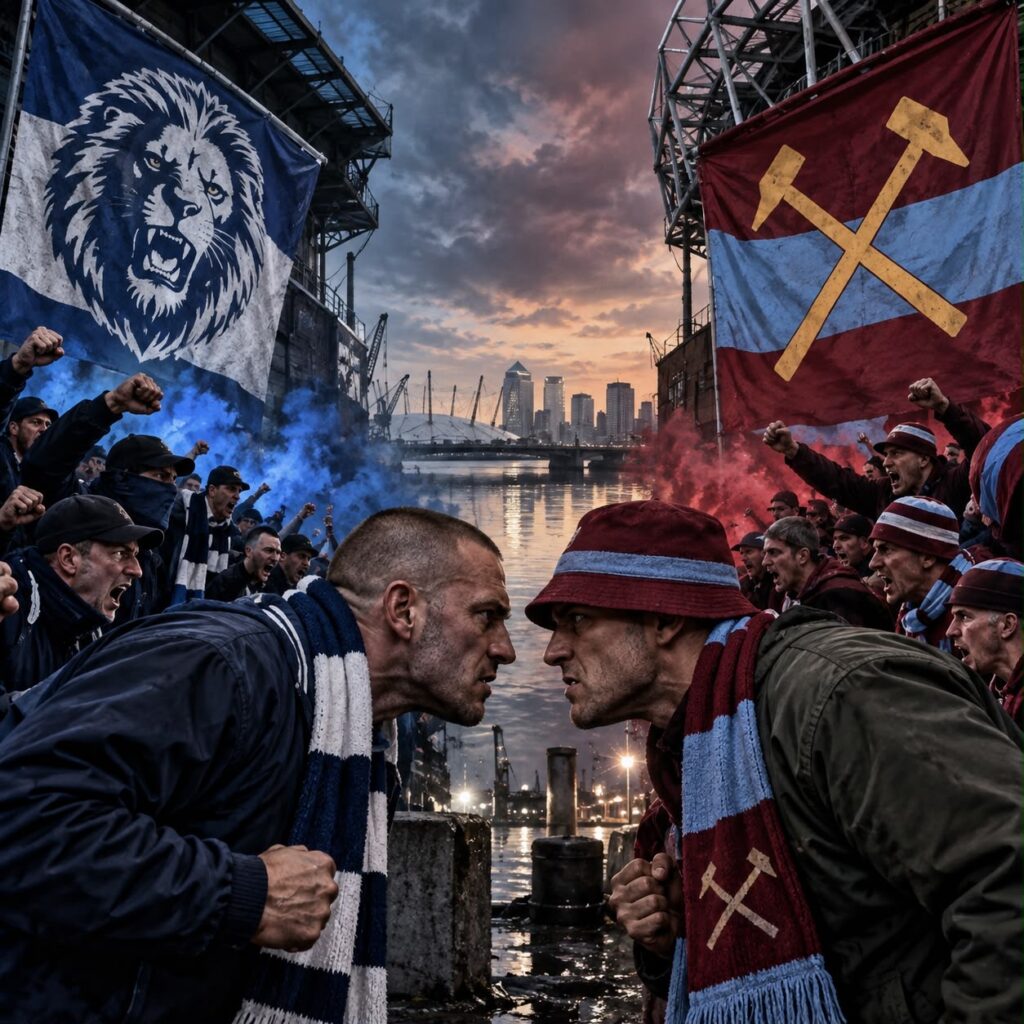
Oggi, sabato 19 settembre, dopo quasi tre lustri (l’ultimo precedente risale al 4 febbraio 2012, quando le due squadre si affrontarono al Boleyn Ground, il vecchio impianto da gioco degli Hammers, sito a Green Street, Upton Park, nella zona orientale di Londra), il Millwall e il West Ham United torneranno ad affrontarsi in campionato.
The Den è pronto a ospitare una delle sfide più affascinanti del calcio inglese, che ha sempre riscosso un profondo e vivo interesse non solo tra gli appassionati di calcio d’oltremanica, ma anche in ambito globale. A Londra il tema del derby viene trattato con cadenza giornaliera in ogni angolo della città, i cui residenti sono già in fermento in vista di una sfida che si preannuncia epica. Si tratta, infatti, del centesimo confronto in partite ufficiali tra le due compagini sulle sponde opposte del Tamigi, e il fatto che torni dopo un arco temporale particolarmente lungo aggiunge un ulteriore fascino alla gara.
La partita fra Hammers e Lions, nota anche come The Dockers Derby (poiché l’estrazione sociale delle due tifoserie – e, nei primi anni di vita dei due clubs, anche degli stessi calciatori – è strettamente connessa all’area del porto di Londra, con scaricatori, stivatori e lavoratori dei cantieri navali sul Tamigi che hanno costituito storicamente il nucleo duro dei gruppi di supporters delle rispettive squadre), fu disputata per la prima volta nella Fa Cup del 1899, quando il Millwall (che allora aveva la denominazione di Millwall Athletic) superò il Thames Ironworks Football Club (il quale l’anno successivo diventò il West Ham United) per 2 a 1. Già in quell’occasione, il clima fu particolarmente acceso, sia in campo tra gli atleti, sia sulle terraces tra le due tifoserie. Le condizioni di vita dell’epoca nei distretti del porto della capitale dell’Impero Britannico erano particolarmente problematiche, nemmeno lontanamente paragonabili a quelle odierne.
Come ha avuto modo di sottolineare l’Academy of Anglo-Italian Comparative Law and Bioethics attraverso le ricerche di Gianluca Sardi (Director of the Academy), Rob Woodford, Dave Sullivan e del compianto John Cooper, figure leggendarie quali il Dr. William Murray-Leslie (che, oltre a essere un illustre Fellow of the Royal College of Surgeons of Edinburgh, Physician, General Practitioner e Barrister-at-Law, è stato il fondatore e primo presidente del Millwall Rovers, in seguito diventato Millwall Football Club), Arnold Hills (presidente dell’azienda costruttrice di navi Thames Ironworks and Shipbuilding Company e fondatore del sopramenzionato Thames Ironworks Football Club. Hills fu anche il primo presidente della London Vegetarian Society, nel cui comitato esecutivo era presente anche il giovane Mahatma Gandhi) e il Dr. Alfred Salter (luminare della medicina, il cui studio sorgeva sull’attuale area della stazione della metropolitana di Bermondsey, a circa dieci/quindici minuti a piedi da The Den) svolgevano un ruolo prezioso nell’organizzazione di iniziative filantropiche di ampio respiro, a sostegno delle comunità che risiedevano lungo le due sponde del Tamigi.
Nei decenni successivi, i confronti diretti tra le due compagini hanno mantenuto un elevato tasso d’intensità dentro e fuori dal rettangolo verde. I rapporti tra le due tifoserie sono spesso purtroppo sfociati nel sangue e hanno avuto un risvolto drammatico la sera 21 settembre 1976. In tale occasione, si incrociarono alla stazione di New Cross (East London Line) i supporters del Millwall (che aveva appena terminato di affrontare il Leyton Orient a The Den in Coppa di Lega) e quelli del West Ham (che, nella stessa manifestazione, si era trovato a giocare contro il Charlton a The Valley). In seguito ai violenti tafferugli scoppiati sulla banchina e all’interno dei vagoni della metropolitana, il diciottenne Ian Pratt, tifosissimo del Millwall cresciuto nella All Saints Estate del quartiere di Rotherhithe, cadde sui binari e morì sul colpo, dopo essere stato investito dal treno.
Allo stesso tempo, però, occorre evidenziare come, soprattutto negli ultimi anni, iniziative benefiche di carattere davvero encomiabile siano riuscite ad unire le due tifoserie londinesi. Al riguardo, va sottolineato in primo luogo il supporto fornito dai supporters del Millwall a Isla Caton, giovanissima supporter degli Hammers alla quale fu diagnosticato un neuroblastoma in tenera età. Diversi tifosi del Millwall hanno preso parte attiva alla raccolta fondi organizzata per sostenere Isla (purtroppo deceduta nel 2022) e la sua famiglia durante il percorso terapeutico.
Ancora più recente è l’iniziativa a supporto di Kris Bennett, giovane padre e tifoso del Millwall, che sta combattendo contro il cancro. Tifosi di varie compagini calcistiche si sono uniti per offrire il proprio sostegno a Kris e alla sua famiglia in questo momento drammatico, con il fedelissimo del West Ham Scott Murphy che nelle prossime settimane ha organizzato una maratona benefica dal sito del vecchio Boleyn Ground allo storico pub Blue Anchor, noto feudo di appassionati del Millwall a Bermondsey.
Se prestassimo fede alla citazione (ancora non attribuita con certezza a un autore specifico) secondo cui le coincidenze sono il modo in cui Dio sceglie di rimanere anonimo, allora dovremmo auspicare che il centesimo Dockers Derby sia foriero di ispirare altrettante iniziative sociali di questo tipo, che riescano a unire due tifoserie e comunità nella realizzazione di finalità collettive particolarmente lodevoli, di assoluta ispirazione anche per le nuove generazioni londinesi.
Che sia un derby spettacolare, in campo e sugli spalti, senza alcuna forma di violenza o intemperanza.
God Save The Dockers Derby!
ENGLISH VERSION
Happy Millwall – West Ham…and many happy returns of the day!
Today, on Saturday 19 September, after almost fifteen years (the last game was on 4 February 2012, when the two sides met at the Boleyn Ground, the Hammers’ former home ground, situated in Green Street, Upton Park, East London), Millwall and West Ham United will face each other again in the league.
The Den is set to host one of the most fascinating fixtures in English football, a match that has always attracted a deep and keen interest not only amongst football fans in the United Kingdom, but also globally. In London, today’s derby is the main topic in conversations in every corner of the city, with local people already buzzing with excitement ahead of what promises to be an epic clash. This is, in fact, the 100th official match between the two sides on the opposite banks of the River Thames, and the fact that it comes after such a long hiatus adds further intrigue to the fixture.
The match between the Hammers and the Lions, also known as The Dockers Derby (that’s because the social background of the two sets of supporters – and, in the early years of the clubs between the late 19th and early 20th Centuries, of the players themselves – is closely linked to the London Docklands, with dockers, stevedores and shipyard workers on the Thames having historically formed the core of the respective fanbases), was first played in the FA Cup in 1899, when Millwall (then known as Millwall Athletic) beat Thames Ironworks Football Club (which became West Ham United in the following year) 2–1. Even on that occasion, the atmosphere was particularly heated, both on the pitch amongst the players and on the terraces amongst the two sets of supporters. Living conditions at the time in the docklands of the capital of the British Empire were particularly difficult, not even remotely comparable to those ones of today. As the Academy of Anglo-Italian Comparative Law and Bioethics has highlighted through the research of Gianluca Sardi (Director of the Academy), Rob Woodford, Dave Sullivan and the late John Cooper, legendary figures such as Dr William Murray-Leslie (who, as well as being a Fellow of the Royal College of Surgeons of Edinburgh, a Physician, a General Practitioner and a Barrister-at-Law, was the founder and first chairman of Millwall Rovers, which later became Millwall Football Club), Arnold Hills (chairman of the shipbuilding firm Thames Ironworks and Shipbuilding Company and founder of the aforementioned Thames Ironworks Football Club. Hills was also the first president of the London Vegetarian Society, whose executive committee included the young Mahatma Gandhi) and Dr Alfred Salter (a leading figure in medicine, whose practice was situated on the site of the present-day Bermondsey Underground station, about ten to fifteen minutes’ walk from The Den) played a vital role in organising large-scale charitable initiatives to support the communities living on both banks of the Thames.
During the following decades, the meetings between the two clubs remained fiercely contested both on and off the pitch. Meetings between the two sets of supporters often, unfortunately, turned violent and reached a dramatic climax in the evening of 21 September 1976. On that occasion, supporters of Millwall (who had just finished playing against Leyton Orient at The Den in the League Cup) and those of West Ham (who, in the same round, had played Charlton at The Valley) crossed paths at New Cross station (East London Line). Following violent clashes that broke out on the platform and inside the Underground carriages, 18-year-old Ian Pratt, a legendary Millwall fan who had grown up in the All Saints Estate in the Rotherhithe neighbourhood, fell onto the tracks and died instantly after being hit by the train.
At the same time, however, it is worth highlighting how, particularly in recent years, truly commendable charitable initiatives have managed to bring the two London fanbases together. In this regard, it is worth emphasising, first and foremost, the support provided by Millwall supporters to Isla Caton, a very young Hammers fan who was diagnosed with neuroblastoma at a very young age. Several Millwall fans played an active part in the fundraising campaign organised to support Isla (who sadly passed away in 2022) and her family throughout her treatment.
An even more recent initiative has been launched in support of Kris Bennett, a young father and Millwall fan who is battling cancer. Supporters from various football clubs have come together to offer their support to Kris and his family during this incredibly difficult time, with West Ham supporter Scott Murphy organising a charity run in the coming weeks from the site of the old Boleyn Ground to the historic Blue Anchor pub, a well-known spot for Millwall fans in Bermondsey.
If we were to accept the saying (which has not yet been definitively attributed to a specific author) that coincidences are the way in which God chooses to remain anonymous, then we should hope that the 100th Dockers Derby will serve as a catalyst for just as many social initiatives of this kind, bringing together two sets of supporters and communities to achieve particularly commendable collective goals, which would also serve as a source of inspiration for London’s younger generations.
May it be a spectacular derby, both on the pitch and in the stands, without any form of violence or disorder.
As the legendary Filippo Galli (who is also a Honorary Fellow of the Academy of Anglo-Italian Comparative Law and Bioethics) experienced in person during his playing career at Watford, The Den can really be the 12th Man on the pitch. Let’s hope it will be able to push Millwall to a performance to be proud of.
God Save The Dockers Derby!
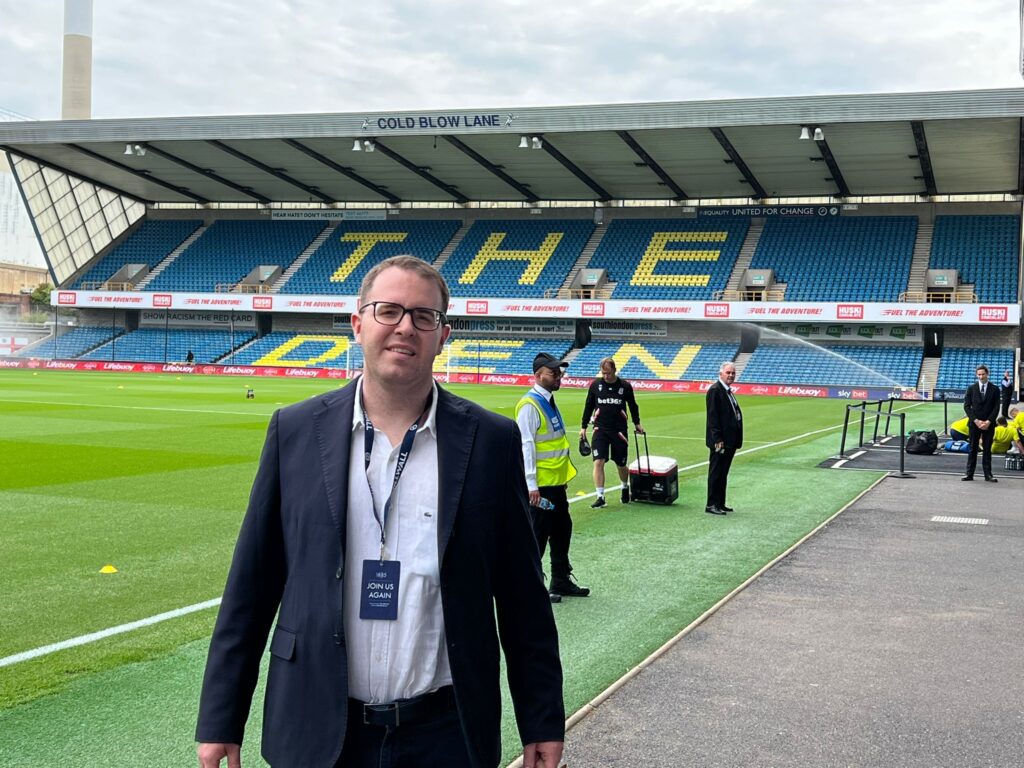
BIO: Prof. Avv. Gianluca Sardi
Gianluca Sardi (1991) è Senior Lecturer in Comparative Constitutional Law e EU Law al London Centre for Interdisciplinary Research.
È iscritto all’Albo degli Avvocati presso il Foro di Teramo e, inoltre, all’Albo dei Registered Foreign Lawyers di Inghilterra e Galles della Solicitors Regulation Authority.
Gianluca, che ha conseguito un dottorato di ricerca in “Processes Law Harmonization between History and System”, è Consultant di Slig Law LLP.
Grazie ai suoi studi sul diritto comparato, sulla Brexit e sui temi inerenti all’Urban Law, ha ricevuto l’affiliazione a Chatham House (The Royal Institute of International Affairs) e all’Academicians’ Roo della Royal Academy.
È risultato vincitore di diversi premi nazionali e internazionali per la sua attività scientifica, tra i quali si ricordano il Meet Italian Scientists e il Premio Luciano Russi.
Da sempre vicino al calcio londinese, Gianluca fa parte del Millwall Business Club ed è Away Kit Sponsor di Tom Bradshaw (attaccante del Millwall Football Club) e Kit Sponsor di Stef Paci (calciatrice italiana in forza alle Millwall Lionesses). Nella stagione 2022/23, è stato anche Match Sponsor e Matchball Sponsor del Millwall Football Club e matchball sponsor del Wealdstone Football Club. Gianluca è anche molto attivo nelle iniziative del Millwall Community Trust.







5 risposte
Nice article, I know Gianluca, a great Millwall supporter.
See you soon Gianluca
Nice to hear from you Mike! Thanks for your comment.
Che bel articolo Gianluca! Spiega tutto alla perfezione 👍
What a great article Gianluca! Explains it all perfectly 👍
Gianluca is great!
Thanks so much, Filippo, Mike and Chrissie. So kind of you!
Come on you Millwalllll